



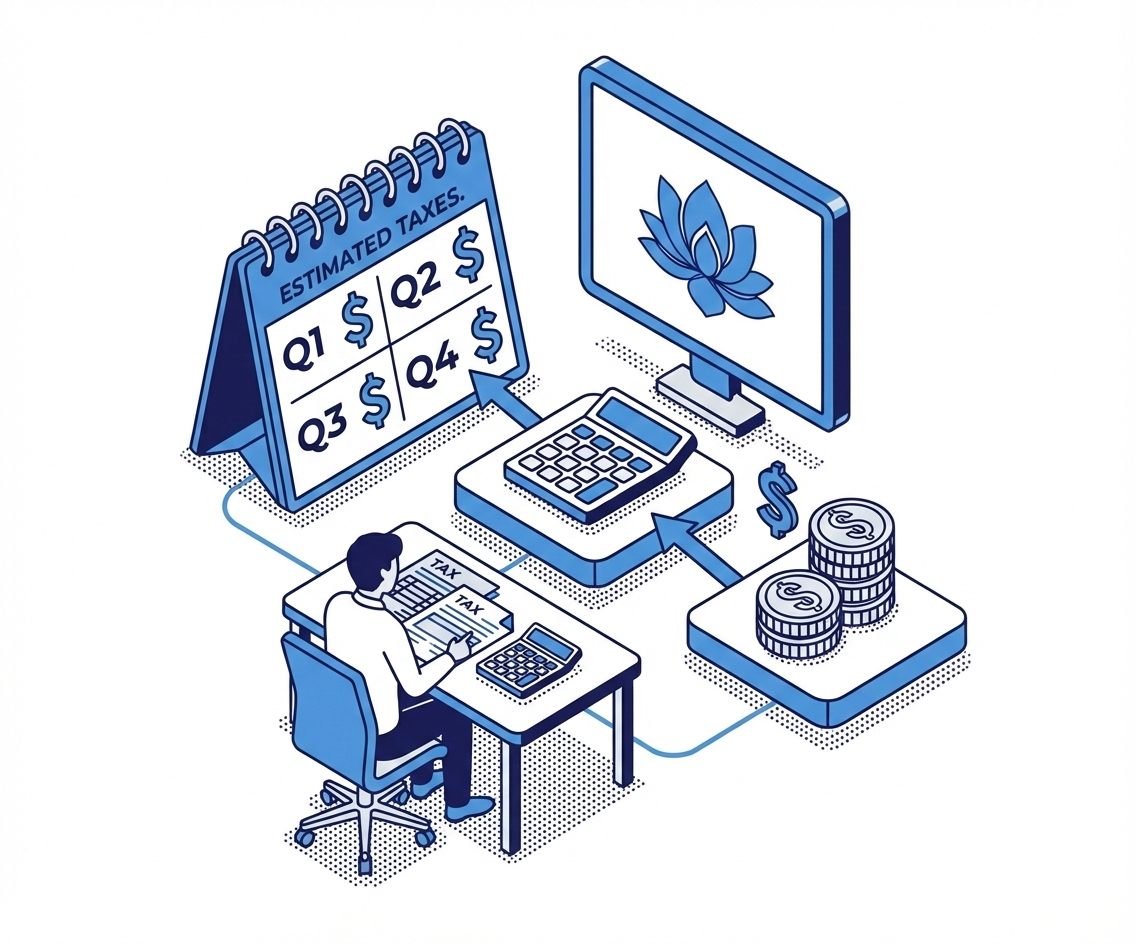
Quarterly estimated taxes are one of the most misunderstood obligations for business owners. Many people assume they're optional, easy to catch up on later, or only required once income reaches a certain level.
In reality, quarterly taxes are not about business size—they're about how income is earned.
At Magnolia Associates, we see quarterly taxes not as a nuisance, but as a planning signal. When handled intentionally, they become routine. When ignored, they become stressful.
Why Quarterly Taxes Exist
Employees have taxes withheld automatically from each paycheck. Business owners do not.
Quarterly estimated taxes exist to replace that withholding system for individuals who earn income without automatic tax deductions. This includes:
- Sole proprietors
- Single member LLC owners
- Partners
- S corporation owners with pass-through income
If you earn income throughout the year and no one is withholding taxes on your behalf, the IRS generally expects you to make payments as that income is earned.
Who Is Typically Required to Pay Quarterly Taxes
You may need to make quarterly payments if:
- You expect to owe at least $1,000 in federal taxes after credits
- Your income is not subject to sufficient withholding
- You earn consistent self-employed or pass-through income
These payments apply regardless of whether your income fluctuates. What matters is the total tax owed over the year, not the timing of when you file your return.
The Consequences of Not Paying Quarterly Taxes
Skipping quarterly payments doesn't defer taxes, it adds penalties.
If you underpay throughout the year, the IRS may assess:
- Underpayment penalties
- Interest on unpaid amounts
Even if you pay everything by April 15, penalties can still apply if payments weren't made on time. This is a frustrating surprise for business owners, especially in their first few years of self-employment.
How Quarterly Payments Are Calculated
Quarterly tax payments are estimates, not exact calculations.
Most business owners use one of two approaches:
- Safe harbor method: Paying at least 100% (or 110% for higher earners) of last year's total tax
- Current-year method: Estimating taxes based on current income and profit
Each method has tradeoffs. Safe harbor offers predictability but may underpay in growth years. Current-year estimation is more precise but requires accurate, up-to-date books.
Why Quarterly Taxes Are Really a Budgeting Issue
Quarterly taxes feel disruptive when they're treated as quarterly problems.
A more effective approach is to treat taxes as a monthly obligation, setting aside funds consistently as income is earned.
When tax reserves are built monthly:
- Quarterly payments feel routine
- Cash flow becomes smoother
- Anxiety around deadlines decreases
Separating Tax Reserves From Operating Cash
One of the most impactful practices we recommend is physical separation.
- Prevents accidental spending
- Clarifies available operating cash
- Creates psychological safety around balances
When tax money is clearly set aside, business decisions become easier.
Quarterly Taxes and Business Growth
As income grows, quarterly taxes often become more significant and more visible.
Growth without planning can create:
- Larger-than-expected tax bills
- Pressure on cash flow
- Delayed investment decisions
Regular review of income and tax exposure helps align growth with sustainability.
What Happens If You Fall Behind
Falling behind on quarterly taxes is common and fixable.
The key steps usually involve:
- Catching up on missed payments
- Adjusting future estimates
- Improving tracking and reserves going forward
The goal is correction, not punishment.
The Magnolia Perspective
Quarterly estimated taxes are not a sign of complexity, they're a sign of ownership.
When handled proactively, they fade into the background of normal operations. When ignored, they dominate attention at the worst possible time.
Our approach focuses on turning quarterly taxes into a predictable, manageable part of your financial rhythm, so they no longer feel like a recurring disruption.