



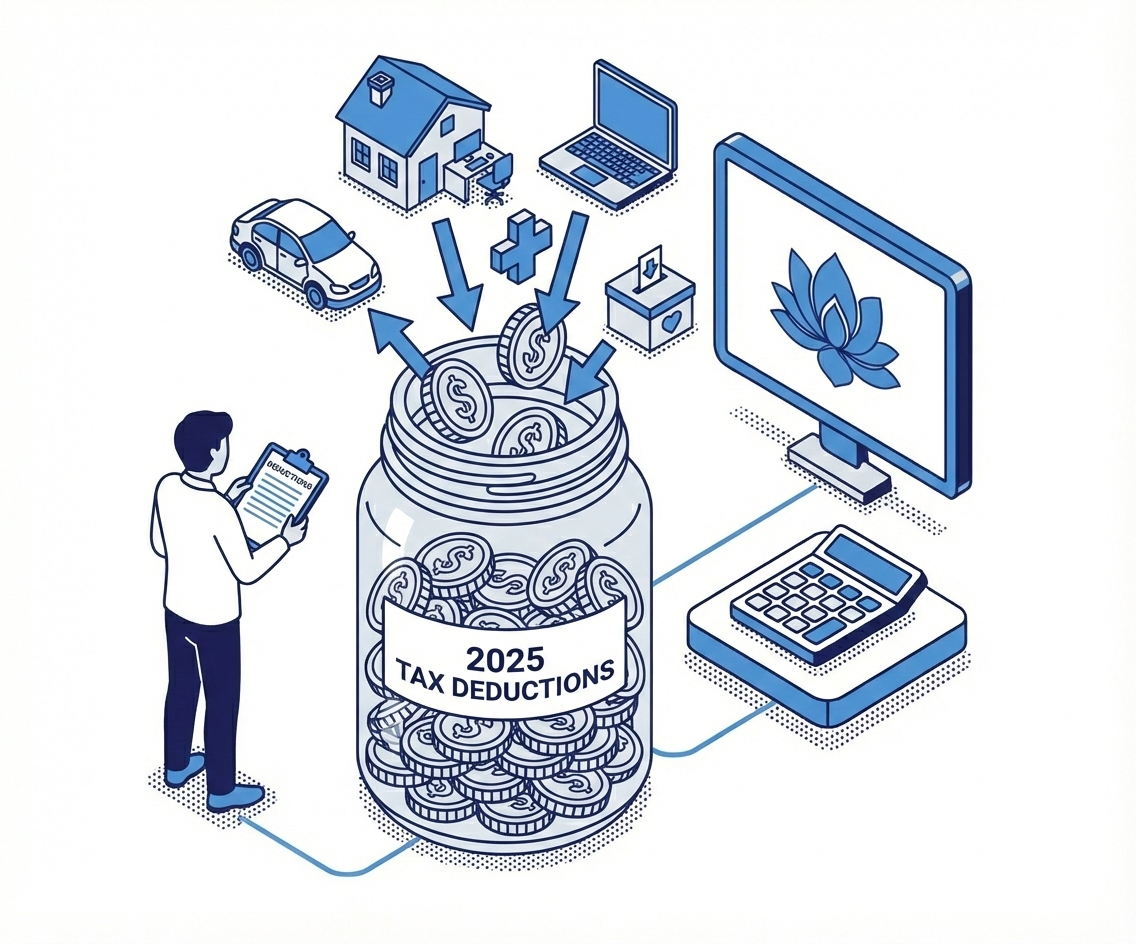
Claiming the right tax deductions in 2025 can materially reduce the amount your practice pays in taxes. Deductions only work when you understand what qualifies, how to document it, and where it belongs on your return.
At Magnolia Associates, we view deductions as part of a broader tax strategy, not a scavenger hunt at filing time. Below is a practical overview of the most common deductions therapy practices claim, along with key updates affecting the 2025 tax year.
Important: Every deduction you claim must be supported by documentation. Receipts and records are essential in the event of an IRS inquiry.
Tax Deductions vs. Tax Credits
Deductions reduce taxable income, lowering your AGI. Credits reduce your tax liability dollar for dollar. Deductions are more common for therapy practices, but credits can be powerful when they apply.
Standard vs. Itemized Deductions
The standard deduction is the flat amount set by the IRS. For 2025, single filers may take $15,750. Itemized deductions require tracking eligible expenses individually and exceeding the standard deduction to provide benefit.
Personal vs. Business Expenses
Business expenses belong on Schedule C, personal deductions appear directly on Form 1040. Accurate classification keeps audits at bay.
Common Business Deductions
Advertising, professional services, meals, travel, bank fees, vehicle use, memberships, continuing education, office rent, supplies, therapeutic tools, payment processing, scheduling software, and AI tools are all common write-offs. Document each item, plan how the expense was used, and keep supporting paperwork.
SALT and PTET Considerations
The 2025 SALT cap increases to $40,000 (scheduled to revert in 2029). Pass-through entities may benefit from PTET elections that effectively sidestep the cap at the federal level—state-specific rules matter here.
The Magnolia Approach
Deductions don't generate savings unless systems are in place. Consistent bookkeeping, proactive tax strategy, and proper categorization make deductions a natural byproduct of a well-managed practice.