



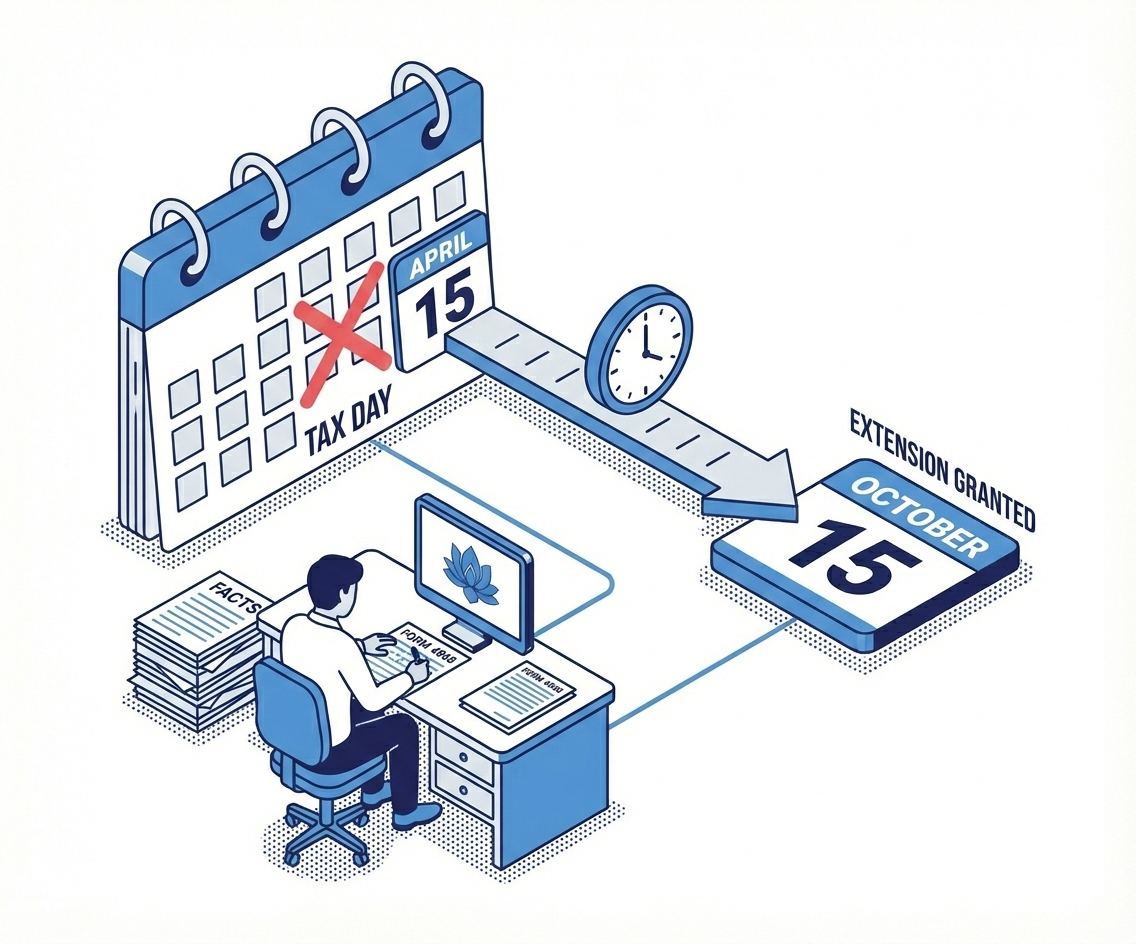
The difference between filing for a tax extension and filing your return late comes down to cost, control, and exposure.
If the tax deadline passes without a filed return, the IRS begins assessing penalties and interest based on the amount you owe. These charges compound the longer the return remains unfiled.
While filing late does not automatically trigger an audit, it can increase the likelihood of additional scrutiny, especially when paired with unpaid balances or inconsistent filing history.
You do have the option to file an extension and push the return out later. The amount you owe is still due on April 15, so tax planning and paying estimates remain necessary.
Is It Better to File an Extension or File Late?
Filing for an extension is usually better. It's automatically granted, carries no penalties or interest by itself, and does not raise audit risk.
Penalties for Filing Your Return Late
Failure-to-file penalties run 5% of unpaid tax per month (max 25%). After 60 days, a minimum penalty applies—the lesser of $525 (2026) or 100% of the tax owed.
Penalties may be reduced if you pay part of the balance or if you're due a refund (provided you file within three years).
Penalties for Paying Taxes Late
The late-payment penalty is 0.5% of unpaid tax per month, capped at 25%. A CP504 notice triggers a jump to 1% per month plus a 10-day cure window.
Reducing Penalties with a Payment Plan
If you file on time but can't pay, an IRS payment plan can lower the penalty to 0.25% per month. Filing on time keeps penalties far lower than failing to file.
What If You File and Pay Late?
Combined penalties reach 5% per month (up to 47.5% total) when both filing and payment are late. Failure-to-file stops accruing after five months, but late-payment penalties continue.
Downsides of Filing for a Tax Extension
There are very few. Extensions simply require Form 4868 (individuals) or 7004 (S corps) and modest professional fees. They don't trigger penalties, interest, or increased audit risk.
The Magnolia Perspective
A tax extension is a planning tool, not a failure. It preserves optionality and keeps penalties off the table while still requiring timely tax payments in April.